
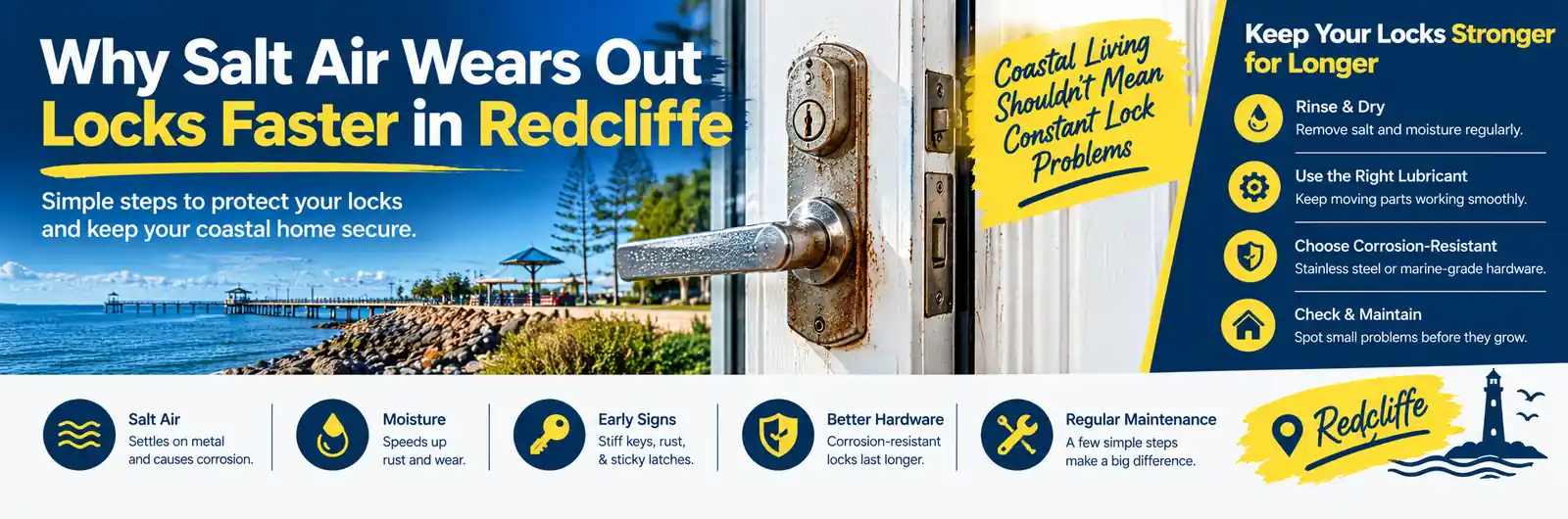
Salt air wears out locks faster because tiny salt particles settle on metal, attract moisture and corrode the moving parts inside the lock, so homes near the water see stiff keys and rust much sooner than homes further inland. Regular care and the right hardware slow the damage right down.
This guide walks through how salt air affects door locks, the early signs of rust and sticking, simple maintenance that works, and when it’s time to replace a corroded lock.
From older weatherboard cottages to newer homes near the foreshore, every Redcliffe lock feels the sea breeze eventually, so knowing what to do early makes all the difference.
How Salt Air Affects Door Locks in Redcliffe
Salt in the air settles on metal, mixes with moisture and slowly corrodes the moving parts inside your locks. Regular care and the right hardware slow the damage right down.
The quick points:
- Salt settles on metal: locks, handles and hinges are the first to suffer.
- Moisture speeds it up: humid coastal weather keeps corrosion active.
- Early signs matter: stiff keys and rust are warnings.
- Care helps: rinse, dry and lubricate with the right product.
- Upgrade when needed: choose corrosion-resistant hardware.
Salt Air Damage to Locks Starts Small
Most lock problems near the coast begin as tiny changes you barely notice. Understanding why they happen makes them easier to prevent.
Why Salt Turns Into Rust
Salt particles carried by the sea breeze land on metal surfaces and attract moisture. That moisture lets rust form, even on parts that look clean. Over time it eats into springs, pins and bolts inside the lock.
Why Redcliffe Homes Feel It More
Redcliffe sits on a peninsula with water close on several sides, so salt reaches many homes. Streets near the foreshore get the heaviest exposure, but salt travels further than most people expect. Locks on front doors and side gates take the brunt of it, especially when they face the water.
How Humidity Makes It Worse
Brisbane’s warm, humid weather keeps surfaces damp for long stretches. Damp metal corrodes faster, especially when salt is already sitting on it. Storms and sea spray add another layer of salt after every blow.
Signs of Rust on Door Handles and Hinges
Your doors usually show warning signs long before a lock fails. A quick check every month or two helps you catch problems early.
Surface Rust and Staining
Orange or brown marks on handles, hinges and strike plates are the first visible sign. They may look cosmetic, but they show that corrosion has started. If the rust is spreading, the metal underneath is being weakened.
Lock Key Sticking or Hard to Turn
A lock key sticking or hard to turn is one of the clearest signals that salt and rust are building up inside. Don’t force the key, because a bent or broken key can leave you locked out. Treat it as a prompt to clean and lubricate the lock, or to have it checked.
Stiff Latches and Loose Handles
Latches that drag, handles that wobble and bolts that don’t slide smoothly all point to wear. Salt and grit can collect in the moving parts and make them rough. These problems rarely fix themselves and usually get worse, so it pays to look at them early.
“A lock that feels stiff today is telling you it needs attention before it fails.”
Coastal Home Lock Maintenance Made Simple
A few small habits protect your locks far better than occasional big repairs. This routine takes only a few minutes.
Rinse and Dry Regularly
Wipe door hardware with a soft, damp cloth every few weeks to remove salt. Dry it straight afterwards, because leftover moisture speeds up corrosion. Do the same for handles, hinges and the face of the lock.
Lubricate the Right Way
Use a dry lubricant made for locks, such as a graphite-based product. Avoid heavy oil-based sprays inside the lock, since they can attract dust and grit. Apply a small amount to the keyway and moving parts, then work the key a few times.
Check Alignment and Seals
A door that rubs or doesn’t close squarely puts extra strain on the lock. Check that the latch lines up with the strike plate, and tighten any loose screws. Sealing screw holes and gaps also helps keep salt air out of the door.
Expert tip: Do your lock care after a big storm or after a few windy days. That is when the most salt lands on your hardware.
How to Stop Locks Rusting for Longer
Prevention is cheaper and easier than repair. These steps make a real difference over the years.
Keep Salt Off Exposed Metal
The less salt that sits on your hardware, the slower it corrodes. Wipe down exposed locks and handles, especially on doors that face the water. A protective wax or light coating on non-moving surfaces can also help.
Give Locks Some Shelter
Locks under a covered porch or awning last longer than those fully exposed. If you can, shade side gates and back doors from direct spray and rain. Even a small cover reduces how much salt and moisture reach the hardware.
Fix Small Problems Early
A slightly stiff lock or a patch of rust is easy to deal with. Left alone, the same problem can lead to a jammed or broken lock. Act as soon as you notice a change, and ask a locksmith if you’re unsure.
Expert tip: Keep a clean spare key somewhere dry and safe. A fresh copy works far better than one that has worn down in a salty, damp pocket.
Stainless Steel Door Hardware for Coastal Homes
The right materials make a big difference by the water. Choosing well once can save repeated replacements.
Why Stainless Steel Lasts
Stainless steel door hardware coastal homes can rely on resists rust far better than ordinary plated metal. Marine-grade stainless is made for salty environments. It keeps its strength and appearance for much longer.
What to Look for When Buying
Look for locks and handles described as corrosion-resistant or marine grade. Check that the finish is solid, not just a thin coating. A locksmith can recommend options that suit your door and your budget.
Keypad and Smart Lock Care
Electronic locks can suffer when salt air gets into battery compartments and keypads. Choose models built for harsh conditions, and keep the surfaces clean. Always keep a physical key backup in case a battery or sensor fails.
Garage Door Lock and Salt Air Problems
Garages and outdoor areas are often forgotten, but they’re directly exposed. A quick check keeps them secure.
Garage Door Locks and Tracks
A garage door lock and salt air don’t mix well, because exposed springs, tracks and locks corrode quickly. Wash down the door and hardware occasionally to remove salt. Lubricate moving parts and check that the lock still turns freely.
Gates, Padlocks and Sheds
Side gates, padlocks and shed locks sit outside all year and rust fast. Choose weather-resistant padlocks and spray the shackle lightly with a suitable lubricant. Replace any padlock that is stiff, rusty or hard to open. A quick spray and wipe every month keeps them moving freely.
When to Replace a Corroded Lock
Sometimes cleaning and lubricating isn’t enough. Knowing when to replace a corroded lock keeps your home safe.
Signs It Is Time
If a lock is badly rusted, seized or keeps sticking despite care, it is nearing the end of its life. Cracked or loose parts are also warning signs. A failing lock can leave you locked out or leave the door less secure, which is the last thing you want.
Rekey or Replace
Rekeying suits a lock that is still sound but needs fresh keys. Replacement is the better choice when corrosion has damaged the mechanism. A local locksmith can check each door and advise on the right fix.
Conclusion
Salt air is part of life in Redcliffe, but it doesn’t have to wear out your locks. Regular rinsing, the right lubricant, sheltered hardware and corrosion-resistant materials all add years to their life.
Small, regular care is the best protection for your locks and your home. Check your doors, gates and garage this month, and replace anything that is past its best. Make it part of your routine, like testing the smoke alarms.