
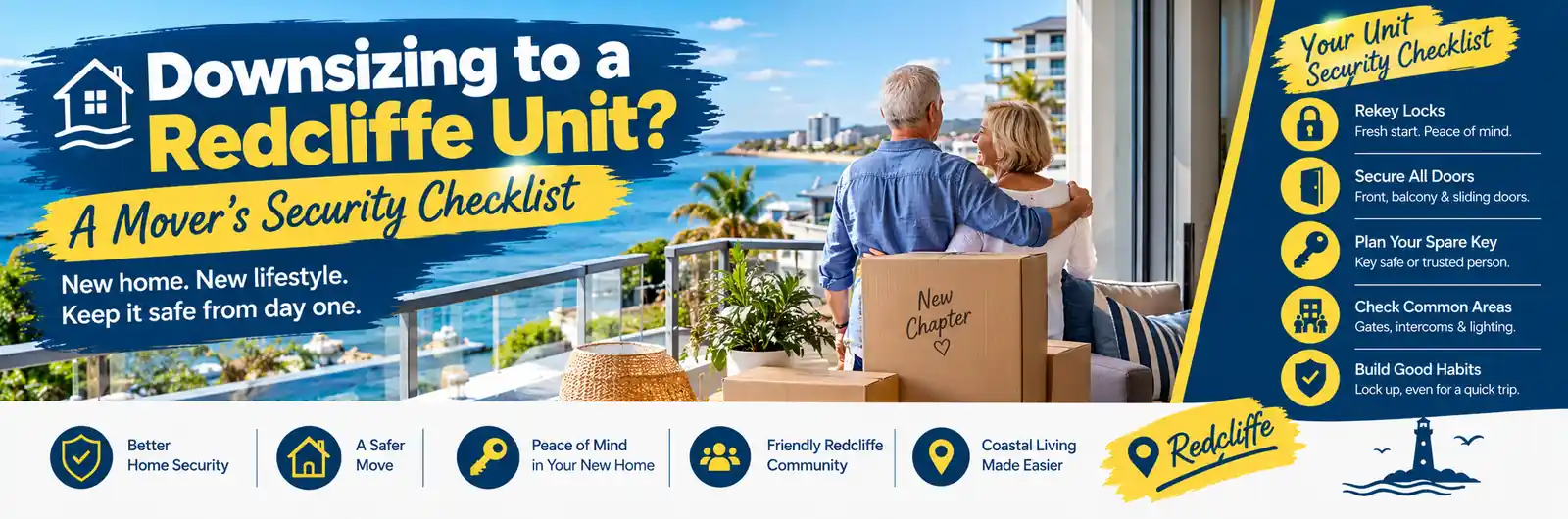
When you downsize to a Redcliffe unit, rekey the locks before you unpack, secure the front, balcony and sliding doors, and decide who holds spare keys. You can’t know who still has the old keys, so changing them first gives you a clean start.
This new apartment security checklist covers what to do before moving day, on the day and in your first weeks, from rekeying locks and spare key plans to everyday habits that keep a unit safe.
From older unit blocks to newer apartments close to the water, unit living in Redcliffe comes with shared doors and balconies, so a few simple checks make a big difference.
New Apartment Security Checklist for Redcliffe Movers
To secure a new unit, change or rekey the locks, fit proper locks on the front door, balcony and sliding doors, and decide who holds spare keys. Do the most important steps before you unpack.
The quick points:
- Rekey the locks: you can’t know who still has old keys.
- Secure the doors: front, balcony and sliding doors all need attention.
- Choose a spare key plan: a lockbox or a trusted person.
- Check shared areas: gates, intercoms and lighting matter in a unit.
- Build good habits: lock up every time, even for a quick trip.
Downsizing Checklist Australia Movers Often Forget
Most downsizing lists cover sorting, selling and packing. Security deserves a place on the list too.
Sort Your Valuables Early
Decide what you’re keeping, selling or storing well before moving day. Keep valuables, documents and sentimental items with you rather than on the truck. A small bag that stays in your hands is safer than any box in the van.
Keep Track of Every Key
Make a list of every key, remote and fob for your old home and your new unit. Hand over the old keys properly and record who holds the new ones. A simple list prevents confusion later.
Check Your Insurance Early
Contact your insurer about your move and your new address. Cover can change when you move to a unit, and some policies have conditions about locks. Keep a note of what they tell you.
Moving House Security Checklist Before Moving Day
A little planning makes the day itself easier. Work through these steps in the week before.
Book Your Locksmith Early
Arrange a locksmith for moving day or the day before. Tell them how many doors and what kind of locks the unit has. Booking early means your locks can be changed before you unpack.
Collect Keys, Remotes and Cards
Ask the agent or seller for every key, remote, fob and access card. Check the list against what you receive. If something is missing, that’s another reason to rekey.
Plan for Moving Day Safety
Removalists move in and out constantly, so the door is often open. Assign someone to watch the entrance. Close and lock the door between trips where you can.
Rekey Locks in a New Apartment
This is the single best step you can take. It takes little time and gives lasting peace of mind.
Why Rekeying Matters
Previous owners, tenants, agents and tradies may all have held keys. Rekeying makes old keys useless. Yours become the only ones that work.
Check Your Rules First
In a unit, some locks and doors face common property. Check with the body corporate or your landlord before changing external locks. Many will agree, but the rules vary.
Rekey or Replace
Rekeying suits a lock in good condition. Replacement is better for worn, loose or low-quality locks. A local locksmith can check each door and advise.
Expert tip: Ask your locksmith for a short written note of what was changed. It makes any later conversation with the body corporate or your insurer simple.
“A new home is the perfect time to start fresh with your keys.”
Apartment Security Tips for Everyday Living
Good habits keep a unit safe long after the move. They take little effort once they become routine.
Lock Up Every Time
Lock the door whenever you leave, even for a quick trip to the shops or the laundry. Many unit thefts happen in seconds. A locked door removes the easy opportunity.
Know Your Neighbours
Say hello to the people around you and swap numbers. Neighbours who know each other notice when something is wrong. It’s one of the best security habits you can build.
Don’t Let Strangers Follow You In
Be careful at shared doors and gates. Politely check who is behind you before holding a door open. Report broken intercoms or gate locks to the manager.
Use Lighting and Blinds Wisely
Leave a light on a timer when you’re out, and use blinds to hide valuables from outside. Keep entrances and balconies tidy so they look cared for. A lived-in look puts off opportunists.
Unit Security Tips Australia Wide Apply in Redcliffe
Units have their own risks, from shared entrances to balconies. These checks cover the main ones.
Shared Entrances and Common Areas
Check that gates, lobby doors and intercoms work properly. Good lighting in stairwells and car parks helps. Tell the body corporate about faults straight away.
Car Park and Storage Areas
Keep valuables out of sight in your car. If you have a storage cage, lock it with a quality padlock. Cover or screen the contents so they aren’t on show.
Windows on Lower Floors
Ground and lower floor windows need key locks. Keep blinds closed at night to hide valuables. Don’t leave windows open when you’re out.
Sliding Door Security Bar and Locks
Many units have a sliding door to a balcony or courtyard. They’re easy to overlook but simple to secure.
Why Sliding Doors Are Weak
Basic latches can be forced or lifted off their tracks. Open or barely latched doors give quick access. They need proper protection.
Fit a Security Bar
A sliding door security bar sits in the track and stops the door opening. It’s cheap, quick and effective. Use it at night and when you’re out.
Add a Quality Lock
A key-operated sliding door lock adds real protection. A locksmith can fit one neatly. Together with a bar, it makes the door much harder to force.
Expert tip: Even on an upper floor, lock your balcony door at night. Balconies can be reachable from neighbouring units and shared areas.
Balcony Door Security
A balcony is part of the lifestyle, but it’s also an entry point. A few steps keep it safe.
Check Access From Outside
Look at whether your balcony can be reached from the ground, a neighbour’s balcony or a roof. If so, treat the door like a ground-floor entry. Fit a quality lock and keep it locked.
Keep Valuables Out of View
Bikes, tools and good furniture on a balcony can attract attention. Store them inside or secure them with a lock. Out of sight is out of mind.
Lockbox for Spare Keys and Carers
A spare key is useful, especially when family or carers visit. How you store it matters.
Better Than Under the Mat
The mat and the plant pot are the first places people look. A lockbox for spare keys is a much safer choice. Choose a sturdy model and check the rules about where you can mount it.
Share With Care
Give the code only to people you trust. Change it when needed, and keep a note of who knows it. Fresh codes keep control in your hands.
Consider Keyless Options
Keypad locks can be handy if you have visitors or helpers. Make sure there’s a backup, such as a key, and keep the batteries fresh. A locksmith can advise which type suits your door.
Keep a Short Emergency Contact List
Keep important numbers where family and carers can find them, such as your locksmith, building manager and insurer. A short list saves time if you’re locked out or something goes wrong. Review it whenever your arrangements change.
Conclusion
A smaller home can be just as secure as a big one. Rekey your locks, secure your doors, sort your spare keys and build a few simple habits.
A little planning on moving day gives you peace of mind for years. Tick off this checklist early, then enjoy settling into your Redcliffe unit. Once the basics are covered, you can get on with enjoying the water views and the neighbourhood.